If we had only listened to Beethoven’s earlier works –up to say 1808-09, we might have expected an explosive introduction; instead, Beethoven begins this piece with a blurring and undulating legato two note combination, as if resuming from an intimate conversation and rather inexplicably, I feel that I recognise it. A quick and reflective change of mood and tempo occurs with the second theme Adagio, which turns into a roller-coaster episode of notes that rise and fall. These further evolve and shorten when scaling the heights. All interspersed with compact rhythmic and dynamic variety. On the rise, the scaling notes begin to slow down, slower and slower –like a climber who is taking his last steps to reach the mountain summit; he reaches his destination and peeks over the other side. The opening theme returns but Beethoven now shows it to us from a multitude of different angles and illuminated with different shades. Significant sforzandi episodes heighten the tension before returning once more to the adagio section, reaching ever-higher heights. The first theme reappears again with a sense of real urgency before winding down, leaving a feeling of exhaustion and ending in a quiet and consoling conclusion. All this has occurred with astonishing brevity and a bare minimum of notes.
There is no time to ponder on what’s has just taken place while we are almost rudely overcome by an unexpected explosion of sound in the second movement, stretching the poor piano to its limits, both in terms of tonal range and in loudness. This theme brushes aside the doubts and delicacies of the first movement, surging forward with syncopated thrusts. It also scales the heights, but this time there are no drops, only single-minded ascension. This thrusting motion relents, and we enter a chapter of rarefied and yet contrasting expression. But the urge to leave a message of firm resolve wins the day, and the striding impetus returns to end the movement decisively.
So far, in the first movement, we have experienced a light meditative sophistication and ascension driven yearnings, followed in the second movement by a fierce resolve and impetus broken off by an introspective episode. Both movements are communicating a message of sharp contrasts between themselves and internally as well. Where will Beethoven lead us now?
This question is answered ever so faintly, as if after resting from the strenuous effort that preceded it, yet persevering and concentrating its efforts to communicate, as if needing to convey an important message; sit here with me in front of the fire, and let me tell you what it’s all about. The theme still climbs and falls but in a more discreet and harmonic driven way.
The first variation of the opening theme starts with feeling expressiveness; a charming melody with rapid three note combinations and a shortened third beat. This theme gives the impression of someone walking on a frozen lake, tentatively testing the ground ahead with one foot.
The second variation starts, we are on surer footing here, joy from relief, dancing the final steps to the shore. A sense of grateful release follows, delicately stated, embellished, and complemented by precious trills.
The third variation is carefree and naïve, with nursery rhyme like sequences of notes. The ascending and descending effect is still here, though with less acute angles. Denoting nimbleness and youthful energy, but in a reminiscent sort of way, as if recalling childhood memories.
The fourth variation is spellbindingly overwhelming. Once again the climbing element is present, but so different from previous occurrences, expressively inferring something from all of them. The effect is very moving.
A fifth variation starts, a stately allegro fugue, with hues of the beginning of the second movement, especially emotively, forceful with conviction. Once again, the climbing motive is present, but due to the fugal element, it seems to have come from the past, in a musically historical sense, though more appropriately perhaps it is being thrust upon the present.
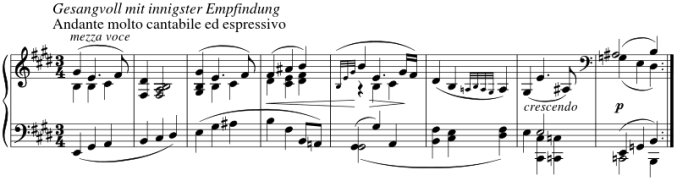
Variation 6 has a meditative character, very slow, beginning with short two-three note combinations, accompanied by bass notes. Then follows a gradual but constant acceleration. Like a rolling snowball gathering ever more snow, rolling faster and faster. This momentum reaches a plateau with long trill sequences. When the lower register takes up the trills on its own, we reach another apex, and the higher register sets off on yet another set of scaling notes. At another crucial point, the bass line interrupts its trill and mimics the notes of upper voice, which in turn, takes in hand the trills and accompanies the bass with short ringing notes modelled on the opening theme. Eventually, things wind down, and we return to the opening theme, but harmonically simplified, without tensions or unneeded underlining, unnecessary because we have travelled so far and the experience has opened our eyes; leaving with us a message of ineffable poignancy.
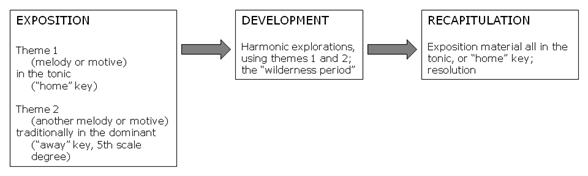
Beethoven has again transformed the Sonata form; some could say that he has betrayed the spirit and equilibrium of the form perfected by Haydn and Mozart. It is true that he dismantles it, but he does not throw it away, it is only to reconstruct it again beyond unimaginable expectation. In the course of his career, he has repeatedly opened up new paths, and these late works indeed give an impression of doing so again. But differently this time, in two main ways: firstly in a more emotional and spiritual manner than in a merely formal one. Reminding me somewhat of Franz Schubert. Secondly, he integrates the form in a historically comprehensive way, no longer rebelling against tradition but coming to terms and absorbing the great inheritance of the past. Not mimicking but metamorphosing it into something new and unique. He draws principally from the classical masters; Haydn and Mozart but also, importantly, from Bach. From 1815 Beethoven has included many fugal elements in his works: The Piano Sonatas Opus 101, 106, 110 and 111. The Fugue in D Major for String Quintet, Opus 137. The Cello Sonata Opus 102 No. 2.
The use of variations in the third movement also recalls Bach who with his Goldberg Variations arguably produced the greatest set of variations in music.
It’s not surprising that Beethoven possesses several works of Bach including the Well-Tempered Clavier, and a manuscript of The Art of the Fugue, he has also been desperately trying to acquire the manuscript of the B-minor Mass.
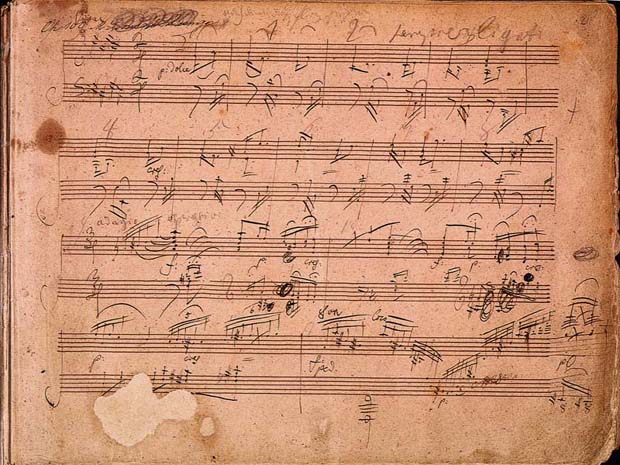
Manuscript of the Sonata no. 30 (beginning of the 1st movement)The Haydn/Mozart Sonata form
 If we had only listened to Beethoven’s earlier works –up to say 1808-09, we might have expected an explosive introduction; instead, Beethoven begins this piece with a blurring and undulating legato two note combination, as if resuming from an intimate conversation and rather inexplicably, I feel that I recognise it. A quick and reflective change of mood and tempo occurs with the second theme Adagio, which turns into a roller-coaster episode of notes that rise and fall. These further evolve and shorten when scaling the heights. All interspersed with compact rhythmic and dynamic variety. On the rise, the scaling notes begin to slow down, slower and slower –like a climber who is taking his last steps to reach the mountain summit; he reaches his destination and peeks over the other side. The opening theme returns but Beethoven now shows it to us from a multitude of different angles and illuminated with different shades. Significant sforzandi episodes heighten the tension before returning once more to the adagio section, reaching ever-higher heights. The first theme reappears again with a sense of real urgency before winding down, leaving a feeling of exhaustion and ending in a quiet and consoling conclusion. All this has occurred with astonishing brevity and a bare minimum of notes.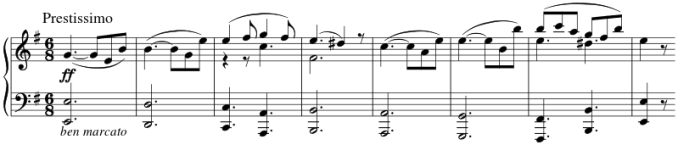
 Claudio Zardon